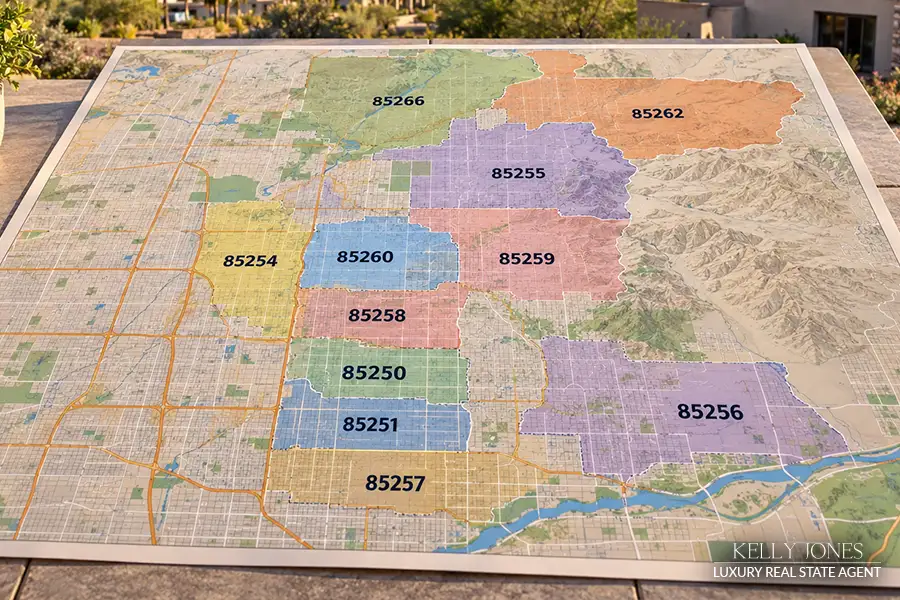
Phoenix, Arizona is one of the fastest-growing cities in the United States, and for good reason. Warm winters, a booming job market, and no state estate tax have pulled hundreds of thousands of new residents into the Valley of the Sun over the last decade. But that growth comes with a price and if you’re planning a move, you need real numbers, not ballpark guesses.
This guide breaks down every major cost category in Phoenix for 2026: housing, utilities, groceries, transportation, taxes, healthcare, and the luxury neighborhoods that attract the city’s wealthiest buyers. Whether you’re relocating for work, retiring in the desert, or sizing up Phoenix real estate as an investment, you’ll leave with a clear, realistic picture.
Quick Answer: How much does it cost to live in Phoenix, AZ? Phoenix’s overall cost of living index sits at approximately 103 about 3% above the national baseline of 100. Housing is the single largest driver, running roughly 15% above the U.S. average, while healthcare runs below average. A single adult needs around $53,000–$64,000 per year to live comfortably, while a family of four should budget $90,000–$123,000 annually depending on neighborhood and lifestyle.
Is Phoenix an Expensive City to Live In?
The short answer is: more than it used to be, but still far below coastal metros.
Phoenix’s composite cost of living index of 103 tells only part of the story. No single spending category is dramatically above average housing at roughly 15% above the national rate pushes the overall number up, but healthcare costs actually run below average, and grocery prices stay within a few percentage points of the national norm.
The bigger shift is trajectory. Phoenix has experienced rapid population growth over the past decade, and that growth continues to push housing costs upward. The Phoenix-Mesa-Scottsdale CPI advanced 1.7% over the 12 months ending February 2026, according to the U.S. Bureau of Labor Statistics, with food prices rising 3.3% year-over-year. That’s meaningful for households budgeting tightly.
For buyers looking at the luxury end of the market Arcadia, Paradise Valley, North Scottsdale the calculus is different. These neighborhoods operate on their own pricing dynamics, and understanding the full cost picture is essential before committing.
If you’re weighing a move to the Phoenix area or considering a luxury purchase in the surrounding communities, the sections below break everything down category by category.
Phoenix Housing Costs: Buying vs. Renting in 2026
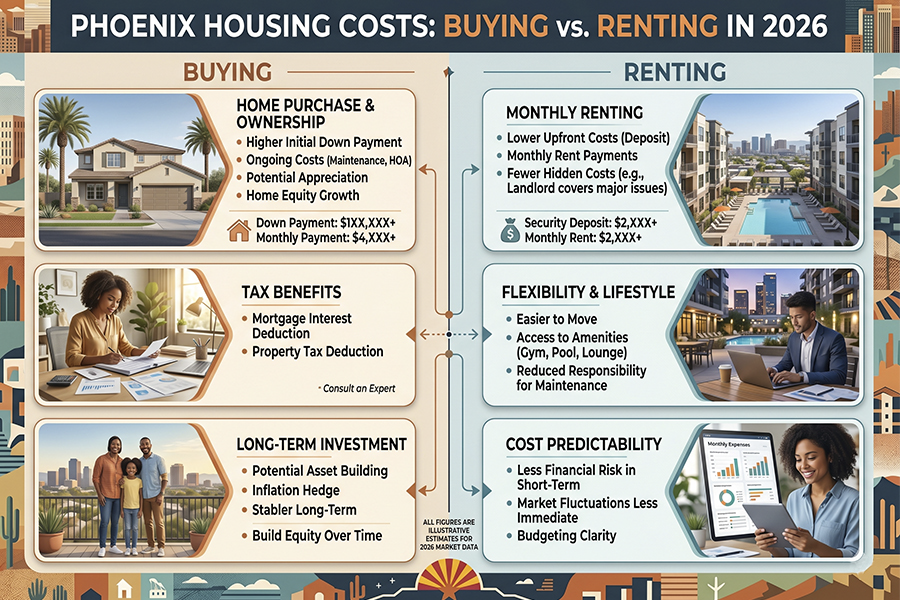
Housing is the category that shapes every other financial decision in Phoenix. It’s also the one where the gap between neighborhoods is widest.
What Does It Cost to Buy a Home in Phoenix?
The median home price in Phoenix sits around $445,000–$475,000 in 2026, compared to the U.S. average of roughly $410,000. That’s a meaningful premium, but a manageable one compared to what buyers face in Los Angeles, San Francisco, or Miami.
Property taxes add far less pressure than in most states. Arizona’s average property tax rate of 0.62% translates to approximately $2,666 per year on a median-priced home — well below the national average rate of around 1.1%. On a $1 million luxury home, that’s roughly $6,200 annually, compared to $11,000 or more in many other states.
For buyers looking at luxury homes in Scottsdale, median home values climb considerably. Scottsdale’s median sits near $651,800, and in neighborhoods like North Scottsdale or Gainey Ranch, prices regularly exceed $1 million. Paradise Valley homes represent the pinnacle of the Phoenix metro luxury market, with many estates priced well into the multi-million-dollar range.
Arcadia draws buyers who want walkability, mature landscaping, and proximity to both Camelback Mountain and the Biltmore corridor with price points that reflect that desirability.
What Does It Cost to Rent in Phoenix?
- Average monthly rent (one-bedroom): $1,337–$1,476
- Average monthly rent (two-bedroom): approximately $1,578
- Scottsdale one-bedroom average: $1,768–$2,000+
Phoenix offers considerably more affordable rental inventory than neighboring Scottsdale, with a monthly median roughly $446 lower. That translates to over $5,300 in annual savings a meaningful number for households on a fixed income or strict housing budget.
Monthly Cost of Living in Phoenix: Category Breakdown
Utilities
Desert living means substantial air conditioning costs, particularly in summer months. Phoenix energy bills average around $198–$245 per month, but summer AC bills can spike well above $600 in July and August. Utility inflation in Phoenix ran 3.5% recently, below the national average of 5.1% a modest win for residents.
Phone bills in Phoenix tend to run below the national average, partially offsetting energy costs.
Arizona-specific utility line items to budget for:
- Pool maintenance: $120–$160/month if hiring a service
- Pest control (scorpion prevention): $50–$75/month
- Landscaping: $100–$150/month for desert-appropriate upkeep
Groceries and Food
Grocery costs in Phoenix run approximately 2–3% above the national average. Day-to-day staples include:
- Gallon of milk: ~$4.80
- Dozen eggs: ~$3.92
- Pound of potatoes: ~$4.48
For a single person, monthly food costs (including dining out) average $335–$400. A family of four with two adults and two children spends closer to $986–$1,100 per month on food, per MIT cost-of-living data.
Dining out in Phoenix offers variety at nearly every price point a casual dinner for two runs $30–$40, while date night at a nicer restaurant averages around $80. The city’s restaurant scene has matured considerably, with fine dining options concentrated in the Arcadia and Paradise Valley corridor giving way to some genuinely exceptional experiences.
Transportation
Phoenix is car-dependent by design. Valley Metro runs a light rail line and bus routes, but most residents own at least one vehicle and households with children typically operate two.
- Gas price average: $3.61–$4.00 per gallon
- One-way transit fare: $2.00
- Monthly transit pass: approximately $63.40
- Tire balancing: ~$65
Vehicle maintenance costs in Phoenix track closely with national averages. Factor in insurance, fuel, and maintenance when calculating true housing affordability commute costs can substantially affect your effective cost per month depending on which neighborhood you choose.
Healthcare
This is where Phoenix delivers a genuine advantage. Healthcare costs run 7–29% below the national average depending on the service:
- Doctor’s office visit: $99–$150 (without insurance)
- Dentist appointment: ~$120–$140
- Optometry check-up: ~$120
- Individual monthly health insurance premium (mid-tier marketplace): $400–$600
- Family monthly premium: $1,200–$1,800
Phoenix’s major hospital systems include Banner Health and Valleywise Health, providing broad coverage across the metro.
Arizona Taxes: A Significant Cost Advantage
Taxes are one of Arizona’s genuine competitive advantages and they matter more than most people account for when comparing total cost of living.
State income tax: Arizona’s flat income tax rate of 2.5% is among the lowest in the nation. The previous tiered structure has been simplified, which benefits higher earners considerably.
Property tax: At 0.62% of assessed value, Arizona’s property tax rate is well below the U.S. average of 1.1%. On a $1 million home, the annual property tax bill runs approximately $6,200 versus $11,000 or more in California or New York.
Sales tax: Phoenix’s combined sales tax rate is 8.6% (5.6% state + 3% local).
Estate and inheritance tax: Arizona has none. This is a substantial advantage for high-net-worth buyers considering the Phoenix metro for a primary or secondary residence.
No hurricane preparation costs: Compared to Florida, Arizona homeowners avoid significant insurance premium spikes and the annual cost of storm preparation. On a $1 million vacation home, the tax and insurance comparison with Florida can easily put $10,000+ back in a buyer’s pocket annually.
How Much Do You Need to Earn to Live Comfortably in Phoenix?
This depends significantly on household size and lifestyle:
| Household Type | Livable Annual Income |
| Single adult, no children | ~$53,433 ($25.69/hr) |
| Single adult (comfortable) | ~$64,000 |
| Two adults, two children | ~$123,226 ($29.62/hr each) |
The median household income in Phoenix is approximately $63,200–$77,041, which aligns reasonably well with baseline expenses for a two-person household in a mid-range neighborhood.
For households targeting luxury neighborhoods in Arcadia, Paradise Valley, or North Scottsdale, comfortable living at the higher end requires a household income of $200,000–$400,000+ depending on mortgage size and lifestyle expectations.
Phoenix vs. Scottsdale vs. Paradise Valley: Cost Comparison
Choosing between Phoenix, Scottsdale, and Paradise Valley is ultimately a lifestyle and financial priorities decision. Here’s how the numbers stack up:
| Category | Phoenix | Scottsdale | Paradise Valley |
| Median home value | ~$340,000–$475,000 | ~$651,800 | $2M–$10M+ |
| Average rent (1BR) | ~$1,337–$1,476 | ~$1,768–$2,000+ | N/A (predominantly owners) |
| Cost vs. national avg | ~7% above | ~15% above | Significantly above |
| Property tax rate | ~0.62% | ~0.62% | ~0.62% |
| Median HH income | ~$63,200–$77,041 | ~$104,197 | Significantly above |
Scottsdale’s cost of living runs approximately 30% higher than Phoenix when accounting for housing, according to BestPlaces data. Paradise Valley, which consists almost entirely of single-family luxury estates, operates at a different tier entirely.
For buyers working with a real estate agent in Phoenix or considering the broader metro, the neighborhood you choose matters as much as the city itself. Arcadia, for instance, commands a significant premium over other Phoenix neighborhoods due to its proximity to Camelback Mountain, walkable restaurant row, and mature tree canopy but remains more accessible than Paradise Valley.
Is Phoenix More Affordable Than Other Major U.S. Cities?
Yes substantially so, when compared to other high-growth Sun Belt metros and coastal cities:
- vs. Denver: Phoenix is approximately 2.6% less expensive overall, with lower housing and healthcare costs, though utilities run slightly higher.
- vs. Los Angeles: Phoenix is dramatically more affordable across every category.
- vs. San Francisco: Phoenix costs a fraction of San Francisco in housing and overall living.
- vs. Miami: Phoenix offers similar weather appeal with lower housing costs and no state income tax burden at Florida’s rate.
- vs. Tucson (within Arizona): Phoenix is more expensive, particularly in housing, but offers a stronger job market and more diverse economy.
Phoenix’s economic base technology, healthcare, finance, manufacturing, and tourism, with major employers including Banner Health, Intel, Honeywell, Arizona State University, and American Express supports strong job market fundamentals. The unemployment rate has held near 3.9%, reflecting a stable labor market even as the national economy navigated volatility.
What People Often Forget to Budget for in Phoenix
Several Phoenix-specific costs catch new residents off guard. Plan for:
Summer utility spikes: Air conditioning bills can exceed $600 in July and August. Budget for this seasonally rather than assuming your winter bills represent typical spend.
Water costs: Phoenix water costs have seen higher-than-average inflation (9.9% recently). Desert-conscious habits help low-water landscaping and efficient irrigation systems pay off over time.
Desert maintenance: Even “low-maintenance” desert landscaping requires professional attention. Rock yards still accumulate debris, and bougainvillea needs trimming.
Pest control: Scorpions are manageable but real. A bi-monthly spray service ($50–$75/month) is standard for families.
HOA fees: Many Phoenix-area communities, particularly newer master-planned neighborhoods and luxury developments, carry HOA fees ranging from $100 to $800+ per month depending on amenities.
Sun damage: Exterior paint, wood finishes, and vehicle interiors degrade faster in Arizona’s UV-intense environment. Budget for more frequent exterior painting and vehicle maintenance.
Phoenix Real Estate: Is Now a Good Time to Buy?
For buyers considering the Phoenix market in 2026, the conditions carry both opportunity and caution.
Prices on median Phoenix homes have moderated slightly from recent peaks, with values near $445,000–$475,000 after several years of rapid appreciation. Analysts project 3%–5% appreciation through the end of 2026, suggesting steady (not explosive) growth ahead.
Arizona’s low property tax rate, flat 2.5% income tax, absence of estate tax, and generally lower insurance costs compared to coastal markets continue to make the Phoenix metro compelling for buyers seeking long-term wealth preservation through real estate.
For luxury buyers, the Scottsdale and Paradise Valley market has remained robust despite national uncertainty, with limited single-family inventory and sustained demand from high-net-worth buyers relocating from California, New York, and the Pacific Northwest. If you want to understand what the elite choose about Scottsdale and Paradise Valley, the combination of lifestyle, tax efficiency, and long-term appreciation remains highly compelling.
Frequently Asked Questions About Cost of Living in Phoenix AZ
What is the average cost of living per month in Phoenix, AZ?
For a single adult, average monthly living expenses excluding rent range from $1,200 to $1,300. Add housing (rent of $1,337–$1,476 for a one-bedroom), and a realistic monthly budget is $2,500–$2,800. A family of four should budget $4,300–$5,500+ per month depending on whether they rent or own.
Is Phoenix, AZ affordable to live in?
Phoenix is affordable relative to most major U.S. cities. Its cost of living runs about 3–7% above the national average, driven primarily by housing. Compared to Los Angeles, San Francisco, or Miami, Phoenix offers significantly lower costs with a comparable or better quality of life for most residents.
What salary do you need to live comfortably in Phoenix?
A single adult needs approximately $53,000–$64,000 per year to live comfortably in Phoenix. A family of four needs $90,000–$123,000+. Residents targeting luxury neighborhoods like Arcadia, Scottsdale, or Paradise Valley should plan for household incomes of $200,000 or more depending on their mortgage and lifestyle.
Is Phoenix or Scottsdale more expensive?
Scottsdale is approximately 30% more expensive than Phoenix when accounting for housing costs. Scottsdale’s median home value is around $651,800, versus Phoenix’s $340,000–$475,000 range. Scottsdale’s median rent for a one-bedroom apartment also runs $400–$600 more per month than Phoenix’s average.
What are property taxes like in Phoenix?
Arizona’s property tax rate averages approximately 0.62% of assessed value significantly below the national average of 1.1%. On a $450,000 home, that equates to roughly $2,790 per year. On a $1 million luxury home, expect approximately $6,200 annually.
Does Phoenix have good job opportunities?
Yes. Phoenix’s economy is anchored by technology, healthcare, finance, manufacturing, and tourism. Major employers include Banner Health, Intel, Honeywell, Arizona State University, and American Express. The metro unemployment rate has held near 3.9%, reflecting a stable labor market.
How does Phoenix compare to Tucson for cost of living?
Phoenix is more expensive than Tucson, particularly in housing and overall living costs. However, Phoenix offers a significantly larger job market, more diverse economic base, and greater access to luxury amenities, making the premium justifiable for most working-age households.
Is the Phoenix luxury real estate market strong in 2026?
Yes. The Scottsdale, Paradise Valley, and Arcadia luxury markets have remained tight despite broader market moderation. Limited single-family inventory, sustained demand from high-net-worth relocators, and Arizona’s tax advantages continue to support robust pricing in the upper tiers of the market.
Final Thoughts
Phoenix, Arizona offers a compelling cost-of-living profile for 2026: slightly above the national average in total, meaningfully competitive on taxes, and genuinely exceptional for buyers seeking luxury real estate with long-term wealth-building potential.
The desert lifestyle, year-round sunshine, outdoor recreation, a maturing cultural scene, and access to world-class dining and golf is no longer a hidden secret. But compared to coastal metros with equivalent amenities, Phoenix and its surrounding communities continue to deliver measurably more value per dollar spent.
If you’re considering a move to the Phoenix metro, particularly in Arcadia, Scottsdale, or Paradise Valley, working with someone who knows the nuances of each neighborhood is the most important financial decision you can make. A home that looks affordable on a listing sheet can carry hidden costs or extraordinary hidden value depending on the street, the HOA, and the micromarket dynamics.